Wawel Hill is a place like no other in Krakow – not only because of the magnificent Royal Castle and the legendary dragon, but also thanks to the remarkable exhibitions and events held within its historic walls. Depending on the season, you can discover it in many different ways. Here is a taste of what Wawel has to offer.
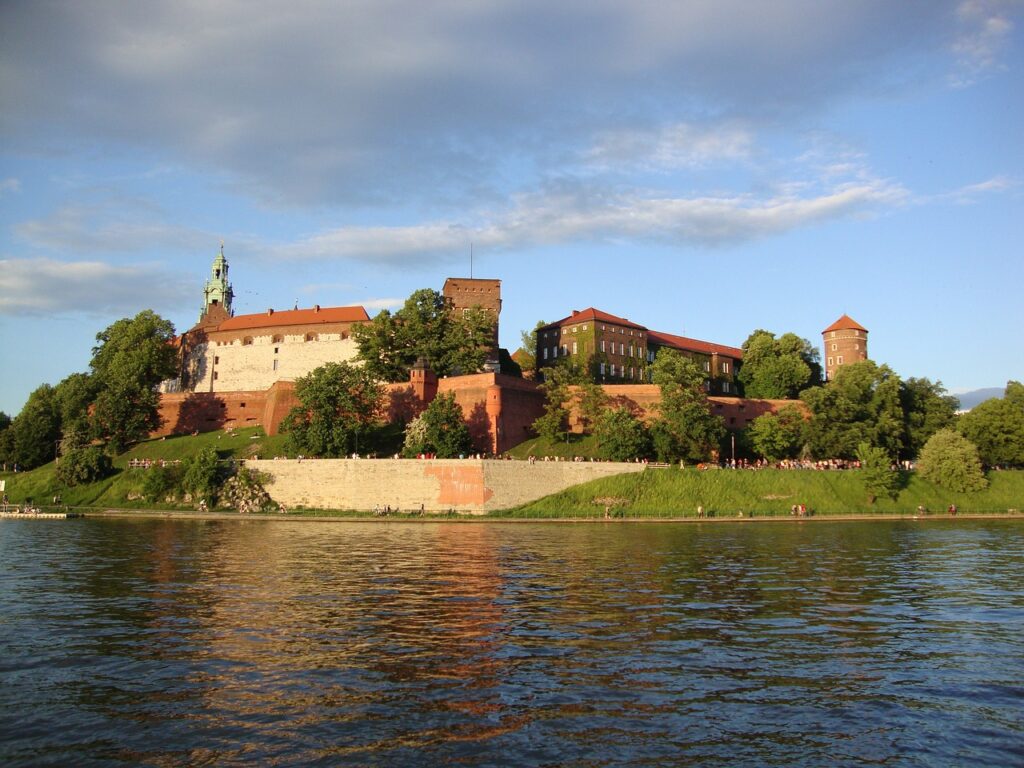
Wawel exhibitions open all year
Whatever the season, anyone who loves history, traditions, monuments and great stories can visit one – or, if time allows, all – of Wawel’s permanent exhibitions. They include:
- The State Rooms – the former residence of Poland’s kings, with grand halls such as the Senators’ Hall, the Envoys’ Hall (with its famous carved heads in the ceiling), the Tournament Hall and the royal chapel.
- The Royal Private Apartments – the kings’ private chambers, along with rooms for the royal court and visiting dignitaries.
- The Crown Treasury and Armoury, full of precious objects.
- Oriental Art and the Turkish tents – works of eastern art that came to Poland through trade and military contacts.
- Lost Wawel, an archaeological and architectural reserve, and Underground Wawel, a lapidarium of historic stonework.
Also worth reading: 7 of the best museums in Krakow
The Cathedral, the crypts and the Sigismund Bell
Visiting Wawel without seeing the Cathedral is like coming to Krakow and not hearing the bugle call from St Mary’s! The present Gothic cathedral was consecrated in 1364 and grew richer with every new reign, resulting in what we can admire today. Alongside its beautiful chapels – including the Sigismund Chapel, the Vasa Chapel and the Holy Cross Chapel – and the Cathedral Museum, it hides the crypts where Polish kings, national poets and bishops are buried.
In the cathedral tower hangs the famous Sigismund Bell, cast in 1520 and one of Poland’s national symbols. It is rung only on the most important religious and national occasions.
Wawel in the warmer months
When the winter cold eases, Wawel opens several extra attractions, which you can visit from spring until autumn. The most popular is the Dragon’s Den, a winding cave route of about 80 metres leading to the lair of the Wawel Dragon, which – according to legend – was defeated by a clever shoemaker. Right by the exit stands one of Krakow’s best-loved symbols: a fire-breathing dragon statue. Find out more about Krakow’s legends and secret spots in mysterious places in Krakow worth visiting.
Another seasonal attraction is the Sandomierska Tower, the highest point of the castle open to visitors. Climb to the top for a wonderful view over the Vistula – and see more of the city’s best panoramas in our guide to Krakow’s best viewpoints.
The Royal Gardens are also worth a visit in season. After years of painstaking archaeological research, they have been recreated in the style of the 16th century, and in spring and summer they are full of colour and fragrance.
Events and tickets
Wawel also runs a full programme for children, families, schools and art lovers, including family workshops, outdoor games, guided walks, performances and many other events – it is worth checking the calendar before your visit.
You will find up-to-date information on events, tickets, bookings and free admission days on the official website, wawel.krakow.pl, or at the tourist information centre. To avoid long queues or sold-out tickets, plan your visit to Wawel in advance – especially in the high season. Staying at Grand Ascot Hotel, you can walk to Wawel through the Old Town – and with our plan for Krakow in 2 days you can fit in all the other highlights too.
Stay in the heart of Krakow
Grand Ascot Hotel is 600 m from the Main Market Square, about a 6-minute walk. What you will find on site:
- underground car park in the building (advance booking required)
- sauna and gym
- Four Restaurant and Wine & Spirits Bar
- buffet breakfast
- pets welcome
- 3 conference rooms, the largest for up to 100 people
Sign up for our newsletter and get up to 10% off your stay.
See rooms and apartments · See special offers
Others also read:



Special offer